Address
124 Tellico Port Rd, Vonore, TN 37885
Work Hours
- Monday – Friday: 8:00 AM – 5:00 PM
- Saturday: 9:00 AM – 3:00 PM
- (GMT-05:00) Eastern Standard Time
Address
124 Tellico Port Rd, Vonore, TN 37885
Work Hours
Address
124 Tellico Port Rd, Vonore, TN 37885
Work Hours
Address
124 Tellico Port Rd, Vonore, TN 37885
Work Hours
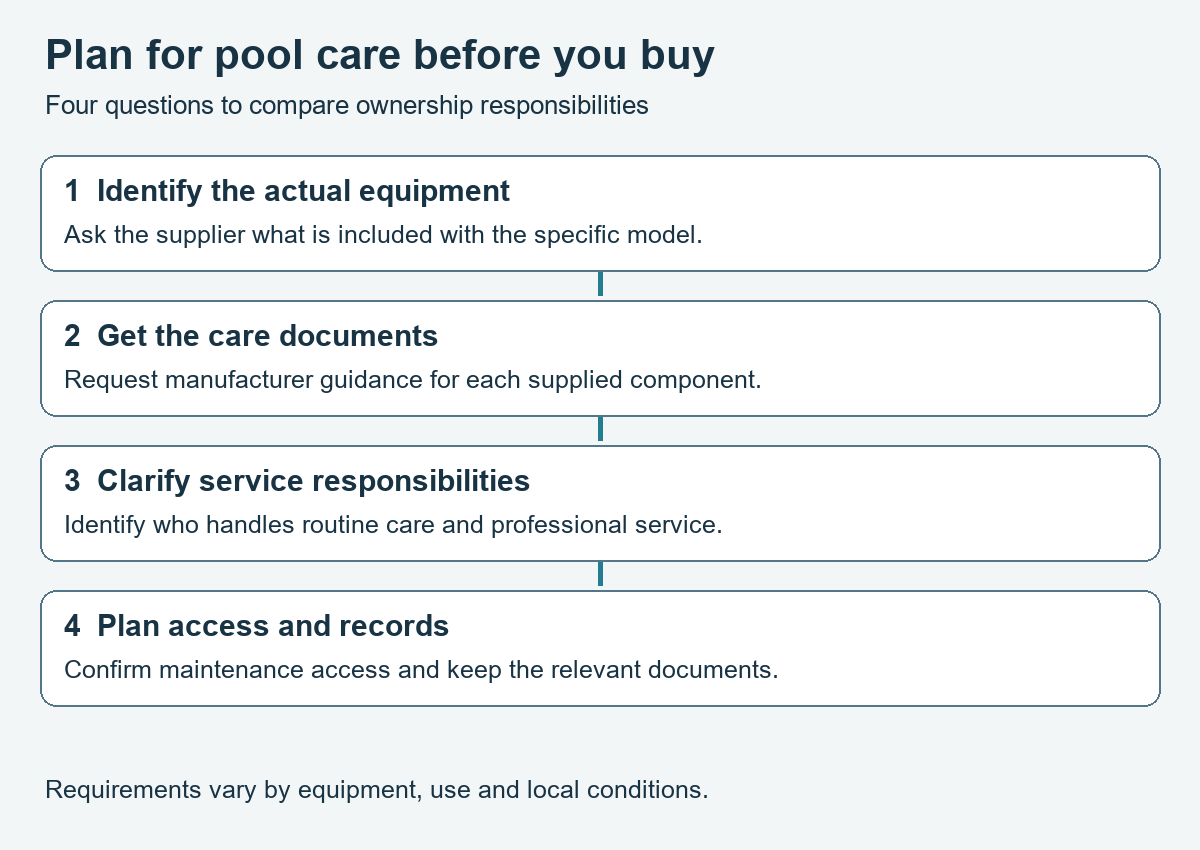
When prospective buyers evaluate modern aquatic additions for their property, initial focus naturally gravitates toward architectural impact, landscape positioning, and structural engineering. However, the long-term enjoyment and asset preservation of an above-ground or semi-inground vessel depend almost entirely on how thoroughly you plan for ongoing care before the pool ever arrives on site. Exploring pre-engineered designs across shipping container pool options is an exciting process, but evaluating the operational realities of filtration, surface integrity, mechanical accessibility, and seasonal transition represents the true foundation of responsible ownership.
Container pool construction and interior finishes vary. Ask the supplier for the materials and care instructions for the specific model.
A proactive buyer approaches acquisition not merely as a single delivery milestone, but as the commissioning of a compact residential mechanical plant. By evaluating cleaning ergonomics, equipment documentation, division of labor between owner and certified pool technician, and regional winterization needs during your initial research phase, you protect both the structural life of the unit and your household maintenance budget.
To plan a viable maintenance program, prospective buyers must understand how the unique hybrid construction of a container pool functions over years of environmental exposure. Unlike traditional pools nestled entirely within thermal earth backfill, a container pool features an exposed or partially exposed external perimeter. Understanding how the outer steel carcass coordinates with the inner bathing vessel influences everything from weekly visual sweeps to multi-year service contracts.
The exterior envelope typically originates from a standardized intermodal shipping container made of corrosion-resistant weathering steel, commonly known as Corten. While this steel develops an outer patina designed to slow natural oxidation, residential backyard environments introduce distinct stresses, such as lawn irrigation overspray, organic foliage accumulation, and splash-out from chlorinated or mineral-balanced pool water. As a prospective owner, your maintenance plan must account for routine exterior perimeter inspections, clearance management to prevent vegetation from trapping moisture against the lower rails, and ongoing monitoring of the exterior paint coating system.
The interior layer contains the water and defines the bather experience. Manufacturers approach interior liners through varying production methods, including seamless drop-in composite fiberglass shells, spray-applied polyurea or epoxy linings, and commercial heavy-gauge vinyl bladders. Each interior system presents unique surface characteristics, chemical tolerances, and care boundaries. For example, some surfaces are naturally resistant to algae anchoring due to ultra-smooth gel coats, but may require non-abrasive cleaning tools to avoid microscopic scratching. Other surfaces require careful monitoring to ensure that vacuum heads and service implements do not abrade critical seams or corner transitions.
Because spatial layouts vary significantly between compact 20ft platforms and extended 40ft layouts, the total interior surface area and volume dictate both your daily visual oversight and the physical reach needed to keep the floor and walls clean. Prospective owners should carefully examine shipping container pool sizes to determine how variations in basin depth, integrated interior seating benches, and built-in steps impact the physical ergonomics of routine maintenance.
A major distinction between premium pool builders and budget fabricators lies in the depth, clarity, and comprehensiveness of their operations and maintenance (O&M) documentation. Before signing a purchase agreement, request and review a sample owner care manual. The manual should not simply be a loose collection of third-party pamphlets from component suppliers, but a unified guide outlining how the specific builder’s structural shell and mechanical integration should be cared for over time.
Equipment arrangements differ by model. Ask the supplier what equipment is included, where it is located and how qualified service providers can access it.
During the buying phase, evaluate how easily a service technician or an owner can access routine maintenance points inside this utility bay. Ask the supplier detailed questions regarding:
Consider how the selected pool layout affects safe access for cleaning and service. Ask the supplier and local professionals to review the exact arrangement.
A sustainable maintenance strategy relies on establishing a clear, realistic division of labor between what the property owner manages weekly and what requires a licensed, certified pool service specialist. Attempting to undertake complex mechanical, structural, or electrical tasks without appropriate trade qualifications introduces significant safety hazards, system failure risks, and potential warranty cancellations.
| Operational Category | Typical Owner Routine Care | Qualified Specialist Responsibility |
|---|---|---|
| Physical Debris Management | Emptying the skimmer basket; clearing surface debris with a non-abrasive leaf rake; monitoring pool floor accumulation. | Deep vacuuming through dedicated bypass ports; dislodging persistent deposits; inspecting submerged main drain covers for flow clearance. |
| Filtration Maintenance | Visually checking the pressure gauge on the filter tank; noting changes in circulation flow strength at returning eyeballs. | Disassembling pressure vessels; inspecting internal lateral arrays or manifold cartridges; executing deep chemical element degreasing. |
| Shell & Frame Integrity | Conducting monthly visual walk-arounds of the Corten steel exterior; verifying bottom rail weep holes remain clear of mulch or soil. | Ultrasonic shell thickness testing (if required on aged units); assessing protective epoxy barrier adhesion; structural weld evaluations. |
| Pumps & Heating Units | Listening for abnormal motor noise; checking the clear pump strainer lid for air bubbles; confirming digital interface displays normal status. | High-voltage electrical diagnostics; motor capacitor replacements; internal impeller clearing; heat pump refrigerant and coil servicing. |
| Water Chemistry Adjustments | Collecting water samples; performing home test kit readings; logging metric trends over time. | Calculating saturation indexes; administering concentrated chemical treatments; establishing customized sanitization schedules. |
Always engage an insured, certified pool professional (such as a technician holding credentials from recognized industry bodies like the Pool & Hot Tub Alliance or regional equivalents) to perform complex equipment overhauls, high-voltage diagnostics, or major seasonal commissioning.
Proper water chemistry is the single most vital factor in extending the life of your pool’s interior surface and preserving mechanical components. However, because chemical reactions, mineral precipitation, and sanitizer efficacy are heavily influenced by local source water characteristics, prospective owners should treat water testing as a structured consultation topic with a local pool professional rather than relying on generalized assumptions.
Container pools carry smaller water volumes relative to their surface area compared to large commercial installations. Consequently, environmental loads—such as swimmer volume, intense direct sunlight, heavy rainfall, or falling organic matter—can shift the balance of the water much faster than in a deep, 50,000-gallon traditional basin. If water becomes aggressively corrosive (acidic or low in mineral saturation), it can target metal heating elements, pump seals, and microscopic vulnerabilities in interior finishes. Conversely, scale-forming water can deposit mineral crusting on smooth fiberglass or liner walls and choke filtration pores.
Before your pool is delivered and filled, locate an established, reputable retail water analysis center or pool service firm near your home. Arrange an initial consultation using a sample of your tap or well water, and ask the following targeted questions:
By engaging an expert early, you remove the guesswork from water care, avoid the risks of miscalculated home chemical dosages, and ensure compliance with your manufacturer’s documented baseline parameters.
For buyers residing outside of year-round tropical regions, climate adaptation is one of the most critical elements of container pool maintenance planning. Because above-ground container pools have exposed side walls surrounded by moving ambient air rather than insulating sub-surface soil, their rate of thermal transfer is significantly higher than that of traditional in-ground pools. Water chills more rapidly during autumn cold snaps, and plumbing lines running along the exterior framework are more vulnerable to sudden freezes.
Depending on your geographic location, your seasonal strategy will fall into one of two categories: a complete winter shutdown (winterization) or managed off-season standby heating. You must evaluate the feasibility and requirements of both options with your builder and local service providers:
A rigorous maintenance plan is only as effective as the record-keeping system supporting it. Maintaining detailed, continuous documentation across the life of your pool provides immense benefits: it provides definitive proof of compliance should a warranty claim ever arise, accelerates diagnostic troubleshooting when a technician services your equipment, and significantly enhances the pool’s value should you ever sell the property.
Create a dedicated physical binder or organized digital archive before delivery day. Your pool dossier should systematically house the following records:
When prospective home buyers or future appraisers evaluate your property, an organized maintenance dossier changes the perception of the pool from a potential liability into a well-managed, turnkey luxury asset. Prospective buyers should review our breakdown of overall shipping container pool cost variables to understand how consistent maintenance and record-keeping protect baseline capital investments against premature degradation.
Before finalizing a contract for a container pool, walk through this practical evaluation checklist. Use this framework during your consultations with the pool manufacturer, your general contractor, and your local pool service technician to identify gaps in your maintenance strategy before installation begins.
| Planning Category | Key Questions & Verification Checks | Owner Verification Status |
|---|---|---|
| 1. Manufacturer Documentation | Does the builder provide a comprehensive O&M manual with explicit warranty care schedules, structural paint guidelines, and component part numbers? | [ ] Confirmed & Reviewed [ ] Sample Requested [ ] Deficiencies Noted |
| 2. Equipment Bay Accessibility | Are the pump, filter canister, and electrical panel easily accessible for a full-grown technician to service without removing structural bracing? | [ ] Ergonomically Sound [ ] Clearance Verified [ ] Modification Required |
| 3. Perimeter Servicing Access | Does the proposed yard installation layout provide at least 24 to 36 inches of clear perimeter walkway to visually inspect Corten walls and drainage? | [ ] Yard Plan Verified [ ] Decking Plan Verified [ ] Setback Confirmed |
| 4. Professional Service Network | Have you identified an insured, certified local pool service professional willing and qualified to service container pool layouts in your zip code? | [ ] Technician Retained [ ] Initial Consult Held [ ] Still Sourcing Pro |
| 5. Regional Source Water Baseline | Have you taken a tap/well water sample to a certified local pool testing facility to establish baseline hardness, metals, and pH tendencies? | [ ] Lab Analysis Complete [ ] Baseline Profile Logged [ ] Treatment Plan Formed |
| 6. Winterization & Freeze Safety | Does the manufacturer provide an engineered protocol for freeze protection or seasonal line drainage suited to your regional USDA hardiness zone? | [ ] Protocol Reviewed [ ] Cover System Selected [ ] Pro Service Scheduled |
| 7. Maintenance Archiving Plan | Have you created a physical binder and digital repository for registration cards, service receipts, inspection checklists, and water logs? | [ ] Dossier Created [ ] Folders Organized [ ] In Progress |
Container pools offer a distinctive appearance. Before choosing one, compare the purchase and ongoing care responsibilities for the specific model.
As you evaluate your site plan and compare configurations, ensure you confirm all specific component inclusions, internal dimensions, and layout footprints directly with the manufacturing team. With a complete maintenance plan in hand, you can move forward with confidence, knowing your property is prepared for a smooth, seamless transition into container pool ownership.