Address
124 Tellico Port Rd, Vonore, TN 37885
Work Hours
- Monday – Friday: 8:00 AM – 5:00 PM
- Saturday: 9:00 AM – 3:00 PM
- (GMT-05:00) Eastern Standard Time
Address
124 Tellico Port Rd, Vonore, TN 37885
Work Hours
Address
124 Tellico Port Rd, Vonore, TN 37885
Work Hours
Address
124 Tellico Port Rd, Vonore, TN 37885
Work Hours
Compare typical 40ft standard and high-cube container dimensions, door sizes, capacity terms and delivery needs.
40 ft shipping container dimensions differ most visibly by height. A standard dry unit is typically 40ft long, 8ft wide and 8ft 6in high outside; a 40ft high cube is generally 9ft 6in high. A representative standard interior is about 12.03 × 2.35 × 2.39m. Exact dimensions, weights and ratings vary by manufacturer and unit.
| Measurement | 40ft standard dry | 40ft high cube |
|---|---|---|
| Exterior length | 40ft / about 12.19m | 40ft / about 12.19m |
| Exterior width | 8ft / about 2.44m | 8ft / about 2.44m |
| Exterior height | 8ft 6in / about 2.59m | 9ft 6in / about 2.90m |
| Representative interior | 12.03 × 2.35 × 2.39m | Taller than standard; confirm exact unit |
| Representative door | 2.34 × 2.28m | Typically taller; confirm exact unit |
Hapag-Lloyd publishes a representative 40ft standard interior of 12,032 × 2,352 × 2,395mm, a 2,340 × 2,292mm door opening and 67.7m³ capacity, while warning that manufacturer specifications vary. Use these as planning figures, not product guarantees.
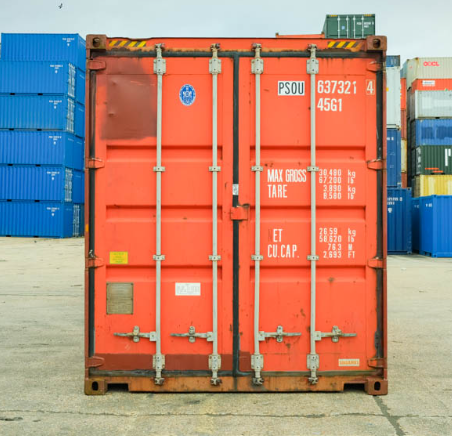
Exterior dimensions establish the site footprint and transport envelope. Interior measurements describe usable room after the frame, corrugation, floor and roof are accounted for. The door opening controls whether a large item can enter. Always check all three.
A high cube adds vertical space that can help with bulky stored goods, tall shelving or modification plans. It does not add length or nominal width. Door hardware, vents, insulation and specialty equipment may still affect usable space.
Cubic capacity describes theoretical volume. Tare is the empty container weight, and payload is its cargo allowance under a given equipment rating. Real loading also depends on weight distribution, packaging, access and regulations. Confirm the exact unit’s plate or documents before planning a heavy load or transport.
The longer floor can work well for bulky inventory, long materials or layouts that need aisles and distinct zones. A high cube can improve vertical clearance. Avoid universal pallet, vehicle or room-count promises: pallet standards, item shapes, shelving and loading patterns vary.
Reefers sacrifice some interior room to insulation and machinery. Open-top units support suitable overhead loading. Flat racks use a different structural arrangement, while side-opening and pallet-wide containers alter access or internal width. A nominal 40 foot container size does not make these configurations dimensionally identical.
A 20ft unit has a smaller site footprint and can suit denser loads or constrained placement. A 40ft unit supplies about twice the nominal floor length and can reduce the need for multiple smaller units, but it needs more delivery runway and turning room. Compare the 20ft dimensions guide or return to the shipping container dimensions hub.
The current Delivery Guide uses 110 feet of straight-line space, 12 feet of width and 14 feet of vertical clearance as planning minimums for a 40ft delivery. Actual access depends on the truck, carrier, ground, turns and obstructions. Mark the placement and door orientation, and have the carrier confirm the route.
Choose standard when its verified height supports the load and site. Consider high cube when vertical space creates useful capacity or working clearance. Then compare condition and configuration using the new versus used guide and Container Grades.
Explore 40 foot containers, high-cube containers, the 40ft general-purpose container and the new 40ft high-cube container. Availability and listing facts can change.
A common standard dry unit is 8ft 6in high outside.
A common high cube is 9ft 6in high outside, one foot taller than standard.
A representative standard dry interior is about 12.03 × 2.35 × 2.39m, but exact units vary.
Container Supcon’s current planning guide uses 110 feet straight-line, 12 feet wide and 14 feet high for a 40ft unit, subject to carrier confirmation.
No. Standard, high-cube, reefer and other configurations differ, and manufacturer specifications vary.
Use these 40ft container dimensions to compare formats, then ask Container Supcon to confirm the selected unit’s measurements, grade, configuration and delivery fit.