Address
124 Tellico Port Rd, Vonore, TN 37885
Work Hours
- Monday – Friday: 8:00 AM – 5:00 PM
- Saturday: 9:00 AM – 3:00 PM
- (GMT-05:00) Eastern Standard Time
Address
124 Tellico Port Rd, Vonore, TN 37885
Work Hours
Address
124 Tellico Port Rd, Vonore, TN 37885
Work Hours
Address
124 Tellico Port Rd, Vonore, TN 37885
Work Hours
Compare one-trip and used shipping containers by grade, appearance, inspection needs and intended use before buying.
New vs used shipping containers is mainly a choice between cosmetic condition, prior use, budget and the job the unit must perform. A new or one-trip container often favors cleaner appearance and limited prior cargo service. Used containers can offer value, but their grade and exact condition matter. Match the grade to the use and inspect the unit facts before buying.
| Factor | New / one-trip | Used |
|---|---|---|
| Prior service | Generally manufactured overseas and used for one cargo trip | Has seen prior service; history varies |
| Appearance | Typically cleaner with less wear | Dents, repairs, markings and surface rust may be present |
| Grade | Confirm listing and unit | May be cargo worthy, wind and watertight, or as-is |
| Buying focus | Appearance, configuration and exact specifications | Grade, structural condition, doors, seals, floor and repair history |
| Best fit | Appearance-sensitive projects or buyers seeking less prior use | Value-focused storage, suitable modification or cargo uses according to grade |
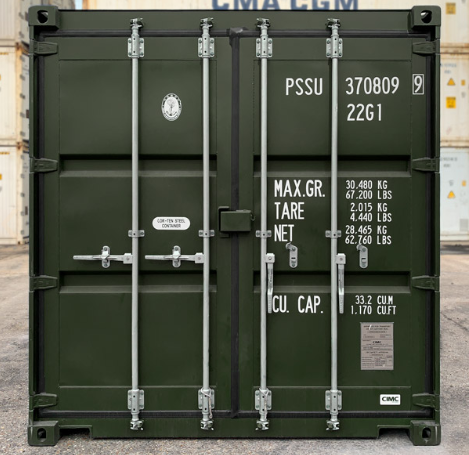

The Container Grades page defines a new or one-trip container as newly manufactured overseas and used for a single cargo trip to the United States. It may show minor handling marks. “New” should not be read as untouched or guaranteed flawless; review the listing and ask about the specific unit.
Used shipping containers are not one uniform condition. Container Supcon’s authoritative grade guide separates them as follows:
Grade names help screen options, but exact-unit photos, condition details and documentation should control the decision.
A suitable WWT or other verified unit may meet a storage plan where weather resistance, doors and floor condition matter more than cosmetics. Confirm the site, stored goods and condition.
Ask for the cargo-worthy status, CSC information and required documentation for the intended route. A storage-grade label does not establish transport eligibility.
One-trip equipment can reduce the amount of existing wear a project must accommodate. Used equipment may still work well when its structure and configuration fit the design. A qualified professional should assess modifications and local requirements.
Choose one-trip when cleaner appearance and limited prior service are worth prioritizing. Choose cargo worthy when verified transport eligibility is required. Choose wind and watertight when appropriate stationary storage is the goal. Consider as-is only when you understand its current condition, repair needs and project risk.
Size comes next. Use the shipping container dimensions hub, detailed 20ft guide and 40ft guide to plan space. Then confirm delivery through the Delivery Guide.
They are newly manufactured overseas and generally used for one cargo trip to the United States, so minor handling marks may exist.
They can be when the verified grade, condition, price and intended use align. Inspect the exact unit facts instead of relying on age alone.
Cargo worthy concerns structural suitability and current transport requirements. Wind and watertight generally describes weather resistance for stationary use and does not establish shipping certification.
That depends on its exact condition. An as-is unit may require repairs and should be inspected for the intended use.
Choose from verified usable space, site footprint, delivery access and budget. The size guides provide typical measurements for initial planning.
Compare current shipping containers, including 20 foot and 40 foot containers. Ask Container Supcon to confirm the exact grade, condition, photos, dimensions and delivery details before ordering.