Address
124 Tellico Port Rd, Vonore, TN 37885
Work Hours
- Monday – Friday: 8:00 AM – 5:00 PM
- Saturday: 9:00 AM – 3:00 PM
- (GMT-05:00) Eastern Standard Time
Address
124 Tellico Port Rd, Vonore, TN 37885
Work Hours
Address
124 Tellico Port Rd, Vonore, TN 37885
Work Hours
Address
124 Tellico Port Rd, Vonore, TN 37885
Work Hours
Compare utility trailer sizes with confidence. Evaluate actual equipment footprints, clear deck widths, entry gate openings, and realistic payload limits.
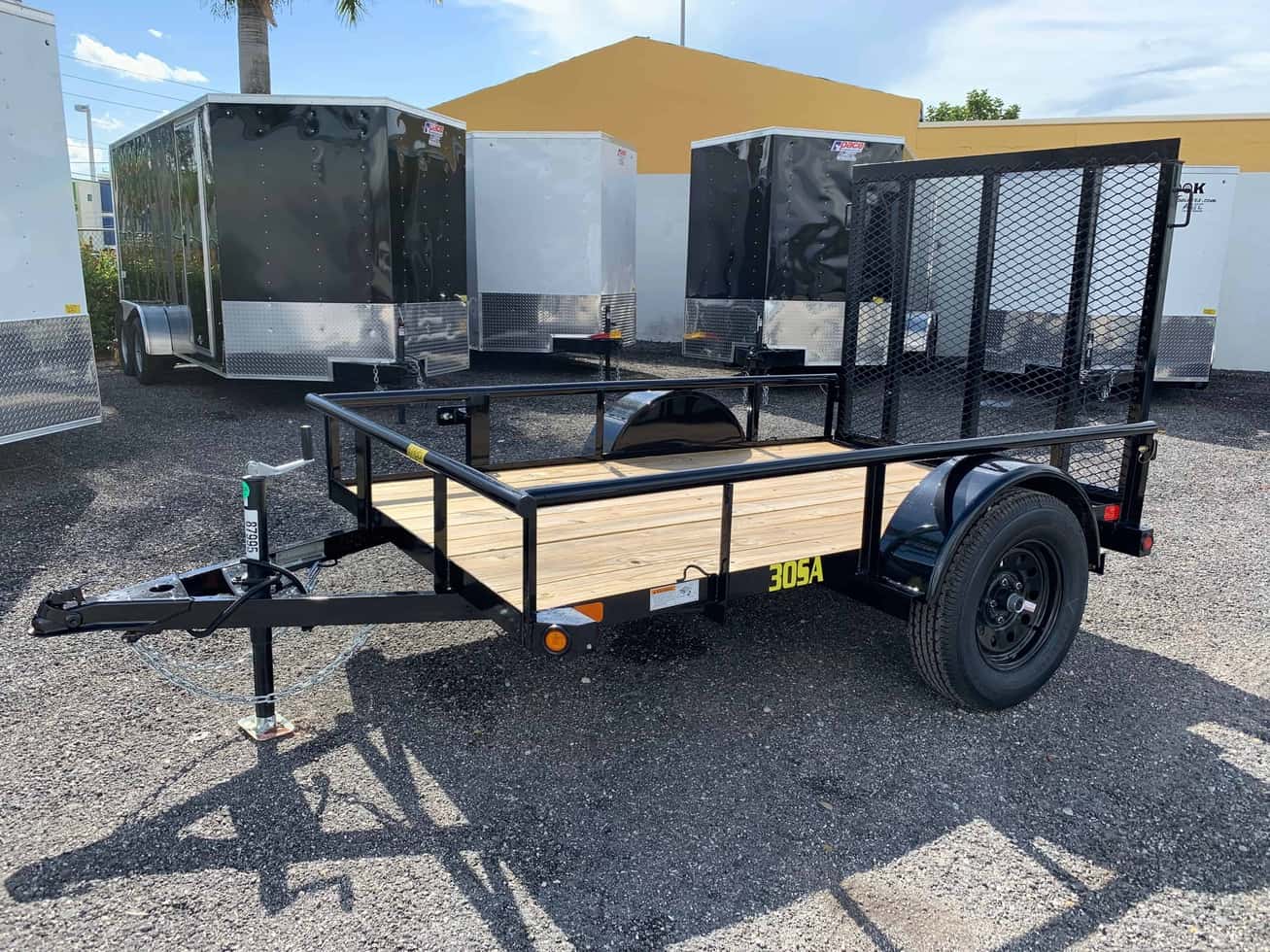
Quick Verdict: Selecting appropriate utility trailer sizes requires matching the physical footprint of your cargo against true clear bed dimensions rather than nominal model names alone. Measure the widest points of your equipment, confirm entry gate clearances, and calculate an initial cargo weight budget by subtracting empty trailer weight from the trailer Gross Vehicle Weight Rating (GVWR) before checking tow vehicle and hitch limits.
Evaluating utility trailer sizes begins well before hitching up to haul. Picture standing in a driveway with a tape measure, looking at equipment, recreational gear, or building supplies. A possible mistake when choosing an open utility trailer is assuming that catalog numbers represent open, usable deck room. A nominal tag rarely reveals whether machinery will clear corner posts or if side rails will pinch wide accessories during loading.
Choosing a suitable utility trailer requires separating physical bed dimensions from carrying capacity. Whether sizing a light utility trailer for residential upkeep or a larger platform for recurring farm and site chores, testing each dimension systematically protects your investment and keeps transit secure.
Before reviewing any utility trailer, measure your cargo directly rather than depending on general equipment brochures. Outboard attachments, accessory mounts, wide tires, deflector chutes, and side mirrors often extend well past the nominal machine track.
Once you capture those outer equipment boundaries, compare them against three spatial checkpoints on the utility trailer you are evaluating:
Model designations across the industry often round dimensions to the nearest foot. When comparing utility trailer sizes, consult detailed manufacturer documentation for specific deck measurements rather than relying on marketing badges.
To illustrate how deck widths vary within an equipment lineup, review these published measurements from a Big Tex manufacturer reference:
| Manufacturer Model Example | Manufacturer-Published Deck Width |
|---|---|
| Big Tex 30SA | 60 inches |
| Big Tex 35SA | 77 inches |
| Big Tex 35SX | 83 inches |
These figures serve as manufacturer-specific reference points rather than a universal standard for every brand. A 60-inch width represents a relatively compact bed width, whereas 77-inch and 83-inch widths offer broader platforms. Because deck design, rail position, and fender style vary by builder, you must verify the exact unobstructed deck width on any offered unit.
Choosing proper utility trailer sizes involves balancing deck area against structural capacity. A long bed provides generous surface space, but generous square footage never replaces gross weight limits.
Look at the manufacturer certification label for the Gross Vehicle Weight Rating (GVWR). You can establish an initial cargo weight budget with this simple calculation:
Estimated Cargo Budget = Trailer GVWR - Empty Trailer Weight
For example, in a hypothetical scenario where a utility trailer carries a 2,990 lb GVWR and has an empty weight of 1,050 lbs, your estimated cargo allowance reaches 1,940 lbs. Treat this number as an initial planning ceiling rather than an absolute operating guarantee. Real-world capacity remains subject to tow vehicle tow ratings, hitch receiver classes, drawbar limits, and axle configurations. When moving denser equipment or heavier building materials, explore our single versus tandem axle comparison to evaluate running gear differences and payload distribution.
A utility trailer must integrate smoothly into loading routines and staging locations. Low-clearance implements can contact the ramp hinge or rear frame if the approach incline is steep. Review the ramp incline and deck height against your machine clearance before committing to a purchase.
Keep these practical operational factors in mind:
Work through this practical worksheet to confirm sizing requirements before you select a utility trailer:
| Measurement Factor | Your Measured Cargo / Site Value | Candidate Trailer Specification | Compatibility Check |
|---|---|---|---|
| Widest Overall Load Width | Record widest point including attachments | Clear bed width between inner rails | Must clear side rails without contact |
| Rear Entry Clearance | Record widest equipment passage point | Clear dimension between gate uprights | Must fit through rear entry structure |
| Overall Load Length | Measure front tip to rear extremity | Flat usable deck length | Must allow balanced axle load placement |
| Planned Cargo Weight | Total equipment, fluids, and accessories | Calculated payload capacity (GVWR minus tare) | Must remain below rated payload allowance |
| Storage Footprint | Available parking depth and clearance | Overall length from coupler to rear gate | Must fit intended storage space |
Factoring in usable bed width, entry clearance, and cargo weight simplifies navigating utility trailer sizes. Start by determining your minimum required deck dimensions and load thresholds. Next, compare available options across our open utility trailer catalogue. If you have unique equipment footprints, special hauling needs, or want to verify specific deck dimensions on current stock, discuss your requirements with our team to confirm measurements on specific offered units.