Shipping Container Permits in Pennsylvania: Avoid Costly Mistakes
Shipping container permits in Pennsylvania explained: the UCC 1,000 sq ft rule, local zoning examples, container sizes vs thresholds and how to get approval.
By the Container Supcon teamUpdated November 20266 min read
Before you place a container on your property, it pays to understand shipping container permits in Pennsylvania. The state sets a baseline building code, but each of Pennsylvania’s 2,500-plus townships, boroughs and cities can add its own rules, so the answer for your lot depends on exactly where you live. This guide explains how the rules work, how container sizes compare with common permit thresholds and the simple steps that help you avoid fines, delays or a forced move.
Key takeaways
Pennsylvania has two layers of rules: the statewide Uniform Construction Code (UCC) and your municipality’s zoning ordinance.
The UCC excludes some detached accessory structures under 1,000 sq ft next to a one-family home, but many municipalities have lowered that threshold, some to 200 sq ft or less.
A 20ft container covers about 160 sq ft and a 40ft about 320 sq ft, so it can fall above a lowered threshold.
Many townships also require a zoning permit or registration for storage containers, with time limits for temporary placement.
Adding electrical service or turning a container into an office or workspace usually means permits.
Always call your local zoning or code office first. It takes minutes and can save you a costly mistake.
Who regulates shipping containers in Pennsylvania?
Two sets of rules apply to a container on your property:
1. The building code (UCC)
The Pennsylvania Uniform Construction Code sets statewide building standards. It decides whether a structure needs a building permit and inspections. Most municipalities enforce it locally, and many have adopted their own amendments.
2. Local zoning
Your township, borough or city zoning ordinance decides where and whether a container may be placed: setbacks, lot coverage, how long it can stay, how many you can have and whether it must be screened from view.
Passing one layer does not mean passing the other. A container may need no building permit yet still need a zoning permit, or the reverse.
The UCC 1,000 sq ft rule, explained
Under 34 Pa. Code § 403.1, the UCC excludes carports, detached private garages, greenhouses and sheds that have a building area of less than 1,000 square feet and are accessory to a detached one-family dwelling, except where a local ordinance requires otherwise.
Three details matter for container buyers:
It only covers structures accessory to a one-family home. Containers on commercial, business or multi-family property are not covered by this exclusion, so permits are more likely there.
Your code official decides how a container is classed. Many treat a storage container like a shed, but always confirm.
Municipalities can lower the threshold. Plenty have.
Some real examples from Pennsylvania ordinances show how much this varies. Carroll Township enforces the code for utility and miscellaneous structures between 200 and 1,000 square feet. North Huntingdon Township requires a building permit for accessory structures of 200 square feet or more. The Borough of Biglerville set its exclusion at 500 square feet or less. Rules like these change, so always check the current ordinance for your address.
What this means: A 10ft or 20ft container often sits under even a lowered building threshold, while a 30ft, 40ft or 45ft may cross it. Building thresholds are only one layer, though. Zoning rules for storage containers can still apply at any size.
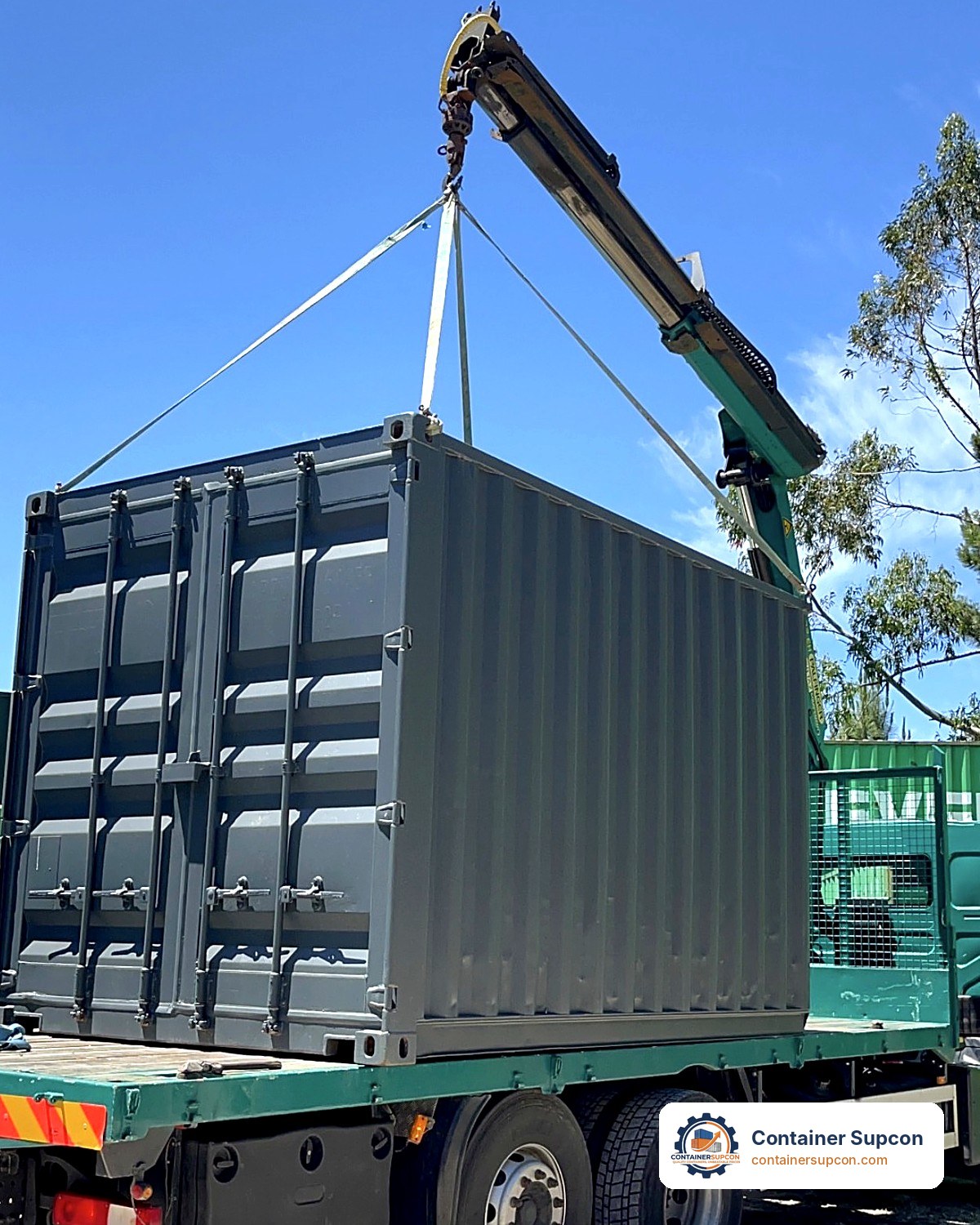
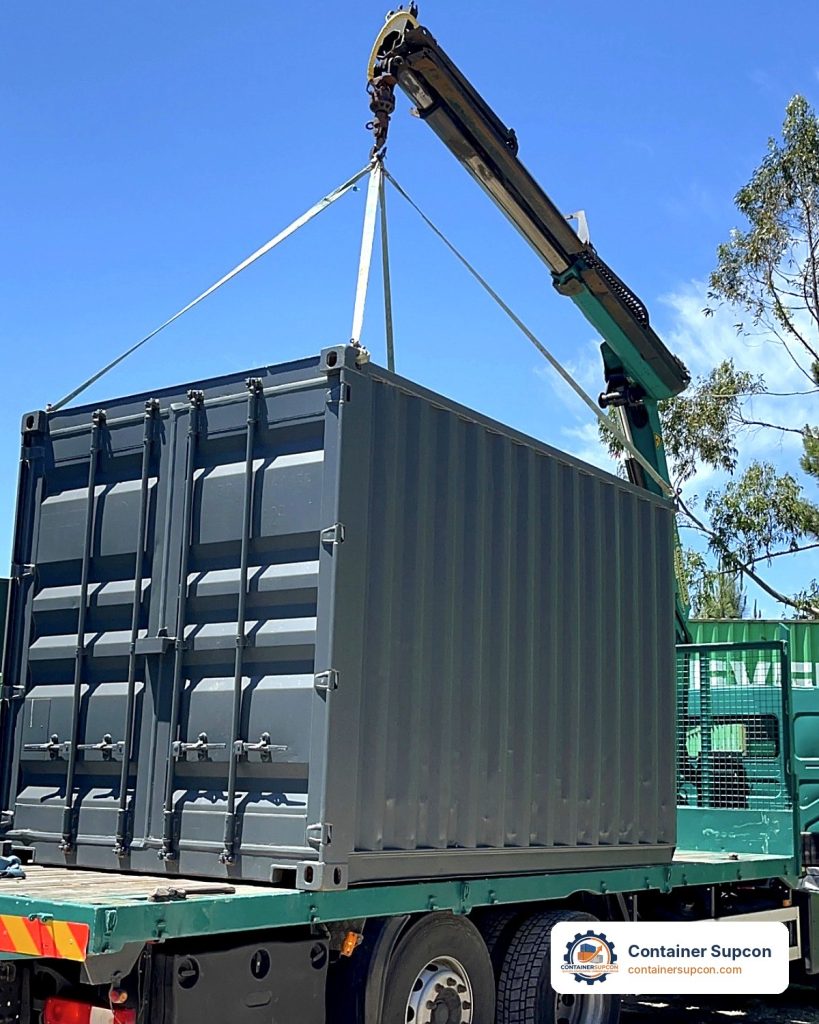
A container secured on the truck, ready for delivery. Check your local rules before delivery day.
Local zoning rules for storage containers
Many Pennsylvania municipalities have ordinances written specifically for shipping, storage or “portable storage” containers. Common rules include:
Registration or a permit before the container arrives
Time limits for temporary placement
A maximum number of containers per lot
Setbacks from property lines and roads
No placement in the street, sidewalk or right-of-way without a separate permit
Screening or placement out of public view
Examples from Pennsylvania townships
Salisbury Township (Lehigh County): requires a temporary zoning permit if a portable storage container stays on a lot more than 30 days, allows a maximum of one per lot, and limits placement on a residential lot to 60 days in any two-year period unless it is part of an active construction permit.
Hanover Township (Northampton County): requires an application and a permit before placing a portable storage unit, with a non-refundable $35 registration fee.
Sugarloaf Township (Luzerne County): allows a licensed and bonded contractor to use storage containers as a temporary office or material storage during construction on the property, under a township zoning permit.
These examples show the range: a container that is fine in one township may need a permit, or have a time limit, in the next.
When you will almost certainly need a permit
Adding electrical service such as lights or outlets. Many municipalities require a permit for utilities serving an accessory structure, even when the structure itself is exempt.
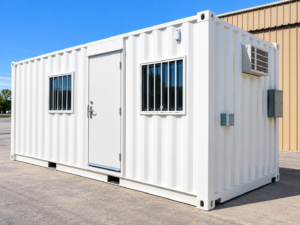
Using it as an office, workshop or occupied space. Our container offices come with HVAC and electrical packages, so plan your permit early.
Placing it on commercial or business property, where the residential exclusion does not apply.
Stacking, joining or cutting containers into a larger structure.
Placing it in a setback, easement, floodplain or right-of-way.
Keeping a “temporary” container longer than your township allows.
Avoid this mistake: Do not assume that a neighbor’s container means yours is allowed. It may be grandfathered, permitted, or simply unreported. Enforcement usually starts with a complaint, and moving a container after delivery costs far more than a phone call to the zoning office.
How to get shipping container permits in Pennsylvania: step by step
Find your municipality. Your mailing address town is not always your municipality. Use Pennsylvania’s Find Municipality by Address tool.
Call or email the zoning officer or code office. Ask the questions below.
Sketch a simple site plan. Show the property lines, the container position, its size and the distance to roads, buildings and boundaries.
Apply for any zoning or building permit needed, and pay the fee.
Do I need a zoning permit, a building permit or both for a storage container?
Is there a size limit, and does a container count as a shed or accessory structure?
Is there a time limit for temporary placement?
What are the setback requirements for my zoning district?
Do I need screening, or a particular color or placement?
Do I need a separate permit to add electrical service?
Tips to keep your container compliant and neighbor-friendly
Choose a tidy grade. A clean one-trip container looks better on a residential lot than a weathered used unit.
Pick a calm color. Greens and greys blend in. See our green, grey and beige one-trip units.
Keep it behind the front building line and away from property lines.
Keep it level and maintained, with no rust streaks or junk around it.
Check your HOA or deed restrictions. These can be stricter than township rules.
Never live in a container unless it has been approved as a dwelling.
Buying a shipping container in Pennsylvania
Container Supcon delivers to eligible addresses across Pennsylvania, from Erie and Pittsburgh to Harrisburg, State College, the Lehigh Valley and Philadelphia. See our shipping containers for sale in Pennsylvania page for popular models and delivery details, or read our local guides for Philadelphia and Allentown.
A Container Supcon delivery truck and driver, ready for the road.
Planning a container in Pennsylvania?
Tell us your ZIP code and how you will use it. We will confirm your delivered price within one business day.
Do I need a permit for a shipping container in Pennsylvania?
It depends on your municipality. The state UCC excludes some detached accessory structures under 1,000 sq ft next to a one-family home, but many townships lower that threshold or require a zoning permit or registration for storage containers. Check with your local zoning office before delivery.
Is a shipping container considered a shed in Pennsylvania?
Many code officials treat a storage container like a shed or accessory structure, but the decision is local. Ask your zoning or code office how it classifies containers.
How big can an accessory structure be without a permit in PA?
The statewide UCC exclusion covers certain structures under 1,000 sq ft that are accessory to a one-family dwelling, but local ordinances can lower that. Some Pennsylvania municipalities require a permit from 200 sq ft.
Can I keep a shipping container on my property permanently in PA?
In many places yes, if it meets zoning rules such as setbacks and permits. Some townships only allow temporary placement for a limited period, so check your local ordinance.
Do I need a permit to add electricity to a container?
Usually yes. Many municipalities require a permit and inspection for electrical work serving an accessory structure, even when the structure itself does not need a building permit.
How do I find my municipality in Pennsylvania?
Use the state's Find Municipality by Address tool, then contact that township, borough or city zoning office. Your mailing town is not always your municipality.
This guide is general information, not legal advice. Building and zoning rules change and vary by municipality. Always confirm the current requirements with your local zoning or code office before placing a container.
Newsletter Updates
Enter your email address below and subscribe to our newsletter