Address
124 Tellico Port Rd, Vonore, TN 37885
Work Hours
- Monday – Friday: 8:00 AM – 5:00 PM
- Saturday: 9:00 AM – 3:00 PM
- (GMT-05:00) Eastern Standard Time
Address
124 Tellico Port Rd, Vonore, TN 37885
Work Hours
Address
124 Tellico Port Rd, Vonore, TN 37885
Work Hours
Address
124 Tellico Port Rd, Vonore, TN 37885
Work Hours
Plan routine dump trailer maintenance safely. Learn visual pre-trip checks, critical safety boundaries, and when to call qualified service technicians.
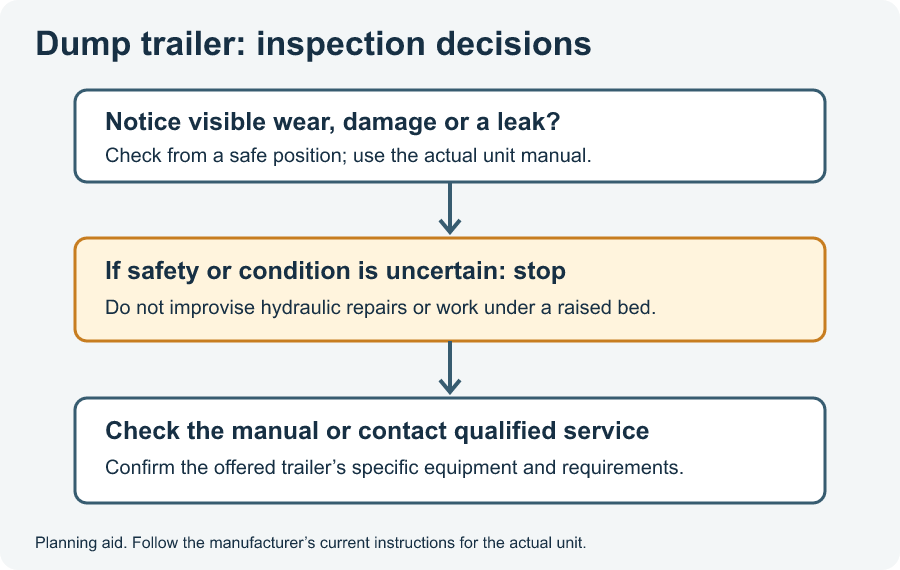
Quick Verdict: Effective dump trailer maintenance starts with disciplined visual inspection before and after every haul, paired with strict safety boundaries. Never position yourself beneath a raised dump bed, leave hydraulic repairs to qualified technicians, and always consult your specific manufacturer manual for exact component specifications and service schedules.
Picture a busy job site at sunrise: the tow rig is running, a heavy load of gravel is waiting, and the hydraulic hoist is ready for the day’s first cycle. Proactive dump trailer maintenance is what separates an efficient workday from an expensive roadside breakdown or a catastrophic worksite hazard. Because dump trailers combine structural chassis stress, heavy payload dynamics, and high-pressure hydraulic lifting systems, routine planning requires an organized approach to inspection, cleanliness, and professional service support.
A systematic routine is the cornerstone of responsible dump trailer maintenance. Rather than guessing when components need attention, establish a consistent walk-around routine every time you hitch up and after you unload.
The running gear on a dump trailer endures severe twisting forces, dynamic payload shifts, and abrasive job-site debris. Incorporating structural wear points into your regular dump trailer maintenance helps you identify developing mechanical issues before they compromise road safety.
Pay close attention to suspension components, including leaf springs, equalizers, and axle hangers. Any misalignment, missing bushings, or sagging springs indicates that the trailer requires qualified workshop evaluation. For wheel bearing lubrication, brake adjustment, and torque specifications, always reference your unit-specific owner’s manual. Operating conditions vary dramatically between highway hauling and muddy excavation sites, making model-specific guidance essential for dependable dump trailer maintenance.
The hydraulic system is the operational heart of any dump trailer, yet it presents the most serious safety hazards. Strict safety protocols must govern this aspect of dump trailer maintenance.
Never position yourself beneath a raised dump bed. Stop using the trailer if you suspect a fault and have a qualified service professional assess it using the manufacturer’s instructions.
Routine owner maintenance for hydraulics should remain strictly observational:
If you observe leaking seals, spongy hoist performance, or erratic lowering behavior, assign the repair to a qualified hydraulic technician. High-pressure hydraulic fluid injection and accidental bed collapse pose severe crushing risks that require professional tools and qualified service personnel.
Environmental exposure accelerates steel corrosion and electrical degradation. Post-use care is an essential yet frequently overlooked phase of ongoing dump trailer maintenance.
After hauling corrosive materials such as road salt, wet mulch, green waste, or fertilizer, thoroughly wash the dump bed, undercarriage, and hinge pivots with clean water. Ensure all bed drainage holes remain clear so standing water does not pool inside the box. Store the trailer on level, well-drained ground, and follow the battery and trailer manufacturers’ instructions for charging and extended storage.
Maintaining a dedicated physical or digital service logbook completes your dump trailer maintenance plan. Document every visual check, professional repair, component replacement, and dealer inspection. A documented maintenance history helps you track recurring problems, plan service and provide useful information when trading or selling equipment.
Standard service schedules printed in an equipment manual establish a baseline, but rarely do two haulers subject their trailers to the same mechanical stresses. A unit dedicated to transporting landscape mulch once a week experiences entirely different degradation patterns than one hauling crushed concrete or wet topsoil daily across uneven excavation sites. To keep your equipment safe and functional without unnecessary downtime, your maintenance planning must account for both payload characteristics and environmental exposure.
Operating environments further amplify these stressors:
In fast-paced hauling environments, operators often face pressure to finish a run despite noticing an emerging mechanical anomaly. However, continuing to operate a compromised dump trailer introduces extreme safety hazards, risks catastrophic roadside failure, and drastically increases eventual repair costs. Implementing a strict “stop-use” protocol establishes clear, objective boundaries for when a trailer must be parked and red-tagged immediately.
A trailer should be taken out of service for professional assessment when you observe any of the following conditions:
Follow these steps to prepare your trailer before dropping it off at the repair facility:
Long-term maintenance costs and downtime are often dictated on the day you purchase your equipment. When exploring commercial dump trailers, looking beyond gross capacity and dimensional volume toward specific structural, electrical, and mechanical design details will directly impact how easily the trailer can be maintained over its working lifespan.
Key design attributes that facilitate practical maintenance include:
Consistent dump trailer maintenance keeps your equipment working efficiently season after season. If you are planning an equipment addition or need to match your payload demands with the right trailer capacity, explore our equipment resources. You can browse dump trailers in our inventory or consult our detailed dump trailer size guide to select the ideal specifications for your hauling operations.