Address
124 Tellico Port Rd, Vonore, TN 37885
Work Hours
- Monday – Friday: 8:00 AM – 5:00 PM
- Saturday: 9:00 AM – 3:00 PM
- (GMT-05:00) Eastern Standard Time
Address
124 Tellico Port Rd, Vonore, TN 37885
Work Hours
Address
124 Tellico Port Rd, Vonore, TN 37885
Work Hours
Address
124 Tellico Port Rd, Vonore, TN 37885
Work Hours
Comparing dump trailer sizes? Learn how to evaluate bed dimensions alongside rated payload capacities before choosing a hauler for your routine work.
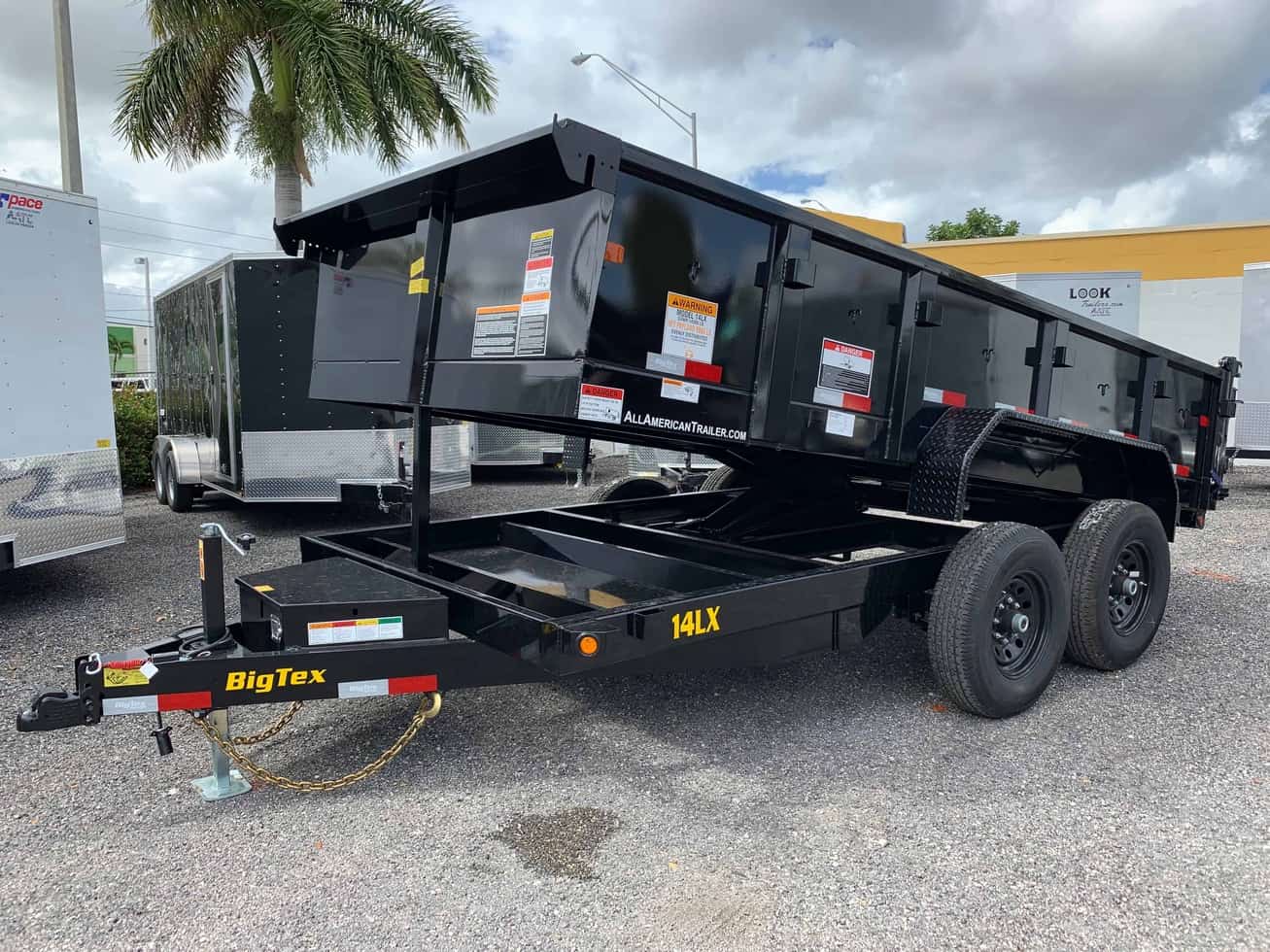
Suppose you are looking at two dual-axle haulers parked side by side. One bed measures twelve feet long, and the other stretches to fourteen feet. It is tempting to assume that stepping up in dump trailer sizes instantly provides greater overall hauling capacity. In practice, selecting an expanded bed footprint under the same weight class can leave you with less rated carrying capacity for dense materials.
When reviewing dump trailer sizes, buyers often focus on exterior length and box volume while overlooking certified mechanical boundaries. Every manufactured trailer has a Gross Vehicle Weight Rating (GVWR), which specifies the maximum allowable combined weight of the trailer itself plus the cargo inside it.
Because longer frames require additional structural material, a longer chassis often has a higher empty curb weight. If the suspension and axle package maintain the same overall rating, that added frame mass directly subtracts from net cargo capacity. A thoughtful dump trailer selection process starts by checking the actual weight rating placard rather than judging capability strictly by bed measurements.
A central step on any practical dump trailer buying checklist is separating volume requirements from weight constraints. Different materials demand entirely different hauling capacities. For instance, high-density loads such as crushed stone, sand, wet soil, or concrete fragments can reach a trailer’s legal weight threshold while leaving substantial open space in the bed.
By contrast, bulky items like branch trimmings, loose demolition lumber, packaging, and scrap take up significant physical space while exerting comparatively modest downward weight. An oversized bed allows bulky materials to be loaded efficiently, but filling that same space with wet aggregate could exceed equipment limits. Instead of assuming a bed should always be loaded to the top rails, verify both the physical dimensions and the estimated weight of your recurring cargo.
To see how frame dimensions interact with payload under a single weight class, consider published specifications from Big Tex Trailers for their 14LP series, presented below as an illustrative manufacturer reference:
| Model Example | Bed Dimensions | GVWR | Empty Weight | Rated Payload |
|---|---|---|---|---|
| 14LP-12 | 12 ft × 83 in | 14,000 lb | 3,870 lb | 10,130 lb |
| 14LP-14 | 14 ft × 83 in | 14,000 lb | 4,180 lb | 9,820 lb |
| 14LP-16 | 16 ft × 83 in | 14,000 lb | 4,250 lb | 9,750 lb |
In this specific lineup, stepping from the 12-foot to the 14-foot bed increases empty weight by 310 pounds, reducing rated cargo allowance from 10,130 pounds to 9,820 pounds. Extending to 16 feet drops payload further to 9,750 pounds. This example highlights why a larger bed does not guarantee a higher weight allowance across identical gross ratings.
Evaluating commercial dump trailers also involves considering the physical spaces where you operate. A longer overall footprint increases the turning space needed to navigate confined properties, narrow alleys, and busy job sites. Tipping height and overhead obstacles such as tree limbs or utility lines must also be evaluated for your intended drop locations.
If you plan to load equipment into the box, measure machine track widths, wheelbase, and ramp clearances against interior bed measurements. Tow vehicle specifications, including hitch class, tongue weight limits, and gross combined weight ratings, must also align with the fully loaded unit you select.
Before committing to an order, log specific data for your candidate dump trailers using this practical evaluation worksheet:
| Candidate Unit ID | Usable Bed Dimensions | Rated Payload (lb) | Planned Cargo Weight (lb) | Site Access Assessment | Purchase Decision |
|---|---|---|---|---|---|
| Option A | |||||
| Option B | |||||
| Option C |
Recording precise numbers for each candidate clarifies whether a given configuration meets your volume requirements without sacrificing the net payload needed for routine work.
Selecting the most effective dump trailer comes down to understanding which operational limit—volume or weight—governs your routine work. If you haul heavy materials where legal payload is the primary factor, a more compact frame may provide the capacity you need while remaining nimble. When evaluating chassis configurations, you can explore our single versus tandem axle comparison for additional insight into running gear layouts.
When you are ready to explore specific models, you can compare available options across our inventory or discuss your requirements directly with our team to confirm current manufacturer specifications, running gear ratings, and physical features for individual units.