Address
124 Tellico Port Rd, Vonore, TN 37885
Work Hours
- Monday – Friday: 8:00 AM – 5:00 PM
- Saturday: 9:00 AM – 3:00 PM
- (GMT-05:00) Eastern Standard Time
Address
124 Tellico Port Rd, Vonore, TN 37885
Work Hours
Address
124 Tellico Port Rd, Vonore, TN 37885
Work Hours
Address
124 Tellico Port Rd, Vonore, TN 37885
Work Hours
Compare shipping container insulation options, moisture control and space loss. Decide between a dry-container fit-out and a refrigerated storage unit.
The best shipping container insulation depends on what you store, the climate and whether the space will be heated or cooled. Compare a complete system—including air sealing, moisture control and the interior finish—not simply the material with the biggest R-value on the label.
Picture a container full of workshop supplies. The steel shell keeps out rain, but opening the doors on a warm afternoon still feels very different from opening a climate-controlled room. Adding a lining may help your plan. It will not, by itself, turn an ordinary dry container into reliable cold storage.
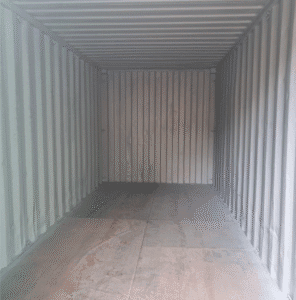
Write down the acceptable storage conditions for the goods. Garden tools, boxed textiles, electronics and temperature-sensitive stock do not have identical needs. Product storage instructions are a better starting point than the assumption that every container should receive the same foam kit.
For refrigeration, inspect a purpose-built listing such as our 10-foot reefer container and confirm the unit’s condition, cooling capability, power requirements and intended application. Buying insulation and buying refrigeration are different decisions. For ordinary dry storage, compare the 20-foot range before planning a fit-out.
| Option | Reason to consider it | Questions to resolve |
|---|---|---|
| Spray-applied foam | An installed system can follow an irregular surface | Specific product, substrate preparation, installer, required protective finish and moisture design |
| Rigid foam or fitted panels | Defined thickness and a planned panel layout | Corrugation fit, joints, edges, fastening and continuous air sealing |
| Framed fiber insulation | A familiar framed-wall approach | Space loss, gaps, thermal bridging and control of moisture at the steel |
| Reflective system | Addresses radiant heat as part of a suitable assembly | Required air space and the performance of the whole assembly |
The U.S. Department of Energy’s insulation overview distinguishes conductive and convective heat flow from radiant heat gain. It also notes that reflective surfaces need an air space and that installation quality affects performance. That general building guidance helps evaluate proposals; it is not a ready-made specification for your container.
Inspect the shell, seals and floor before covering anything. Record leaks, damp contents and visible condensation so the design addresses their causes. Covering an unresolved problem makes it harder to inspect later.
Ask the installer to explain where the air-control layer sits, how joints and openings are treated, and how the assembly manages moisture in your climate. A promise to “stop all condensation” without describing those details is not a useful specification. The EPA’s general moisture guidance separates water-source control, ventilation, dehumidification and insulation; no single measure is a universal fix.
For an unconditioned storage container, start with the ventilation and moisture-control guide. For an occupied or temperature-controlled conversion, have the full enclosure and mechanical design checked for that use. This buying guide does not prescribe electrical work, foam application procedures or an occupancy design.
A lining changes the usable interior. Framing, insulation, protective finishes and services can reduce width as well as height. Draw the finished section before choosing the container; do not wait until shelving no longer fits.
As a simple layout example, a proposed assembly occupying three inches on each side would use six inches of interior width in total. That is arithmetic for checking a design, not a recommended wall thickness. Apply the same calculation to the actual assembly proposed for your project. Use the dimension guide and confirm the unit’s measurements.
If headroom is tight, compare high cube and standard containers before buying. Our high-cube range may give the design more room, but additional height does not settle the moisture or ventilation questions.
A shipping container insulation kit price is only a materials figure unless the seller explicitly includes more. Compare complete proposals, then add the chosen container using our container cost checklist. We are comparing container choices here; availability of an insulation installation service should be confirmed separately rather than assumed.
There is no universal best material. Select a complete assembly for the climate, intended use, moisture conditions and available interior space. Compare product details and installation requirements before choosing foam, panels or a framed system.
Insulation slows heat transfer; it does not actively cool the space. Required temperatures may also need a suitable cooling and moisture-control system.
Compare that option when your goods need controlled conditions. Confirm the actual unit’s capabilities and operating requirements; an insulated enclosure and a working refrigerated container are not interchangeable.
Tell us what you plan to store, your available footprint and whether active cooling is required. Ask about the appropriate container options before committing the fit-out budget.