Address
124 Tellico Port Rd, Vonore, TN 37885
Work Hours
- Monday – Friday: 8:00 AM – 5:00 PM
- Saturday: 9:00 AM – 3:00 PM
- (GMT-05:00) Eastern Standard Time
Address
124 Tellico Port Rd, Vonore, TN 37885
Work Hours
Address
124 Tellico Port Rd, Vonore, TN 37885
Work Hours
Address
124 Tellico Port Rd, Vonore, TN 37885
Work Hours
Compare container vents, fans and moisture-control options. Identify the storage problem and choose a suitable container before paying for a fit-out.
Shipping container ventilation needs to match the contents, climate and way the unit is used. Passive vents and powered fans move air; they do not guarantee a dry interior or a controlled temperature. Start by identifying leaks and moisture sources, then decide whether airflow, dehumidification or a different storage setup is needed.
Imagine collecting equipment after a wet working day, closing it inside a container and returning to damp packaging. Buying a larger fan is tempting. But the first question is what introduced the moisture and whether the outside air can actually help remove it.
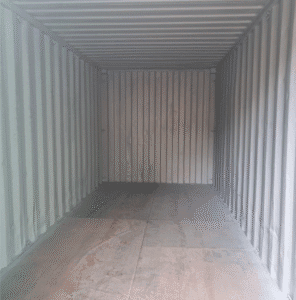
Separate three observations: water entering through a defect, moisture carried in with the contents, and condensation on cool surfaces. They can look similar when all you see is a wet floor. Check the unit after rain and after normal use, and record where the moisture appears.
The EPA’s general moisture guidance recommends addressing water sources and notes that ventilation, dehumidification and insulation can play different roles. Its indoor humidity guidance is not a guaranteed target for every cargo or storage container. The requirements of the goods you store still matter.
Keep a simple log of inside and outside temperature and relative humidity, the weather, and whether damp equipment was loaded. Relative humidity changes with temperature, so compare the conditions rather than assuming the lower percentage always represents drier air. Give those observations to the person specifying the ventilation system.
| Approach | What it does | What to check |
|---|---|---|
| Passive container vents | Allow air exchange without a powered fan | Weather exposure, airflow path, screens and whether conditions provide useful airflow |
| Powered or solar fan | Moves air when operating | Make-up air, controls, power availability, weather protection and maintenance |
| Dehumidification | Removes water from the air under suitable operating conditions | Temperature range, drainage, power and enclosure leakage |
| Conditioned storage | Manages a defined indoor environment as a system | The goods’ requirements and the complete enclosure and equipment design |
More ventilation is not always the answer. Exchanging air with a humid environment may not produce the conditions your contents require. Likewise, adding a fan without a planned air path can leave areas poorly served. Ask for the reasoning behind the proposed system, not just a vent count.
Picture two storage layouts. In one, shelving and boxes are pressed against every wall and stacked in front of the vents. In the other, access and inspection routes stay open. The second layout makes it easier to inspect for dampness and maintain whatever ventilation system is fitted.
Plan the arrangement before ordering the unit. A 20-foot container may serve a modest inventory well; the 40-foot range gives more length but also a larger layout to manage. Extra volume does not remove the need for a suitable moisture strategy.
Keep vents accessible for inspection and cleaning. Have proposed openings and powered equipment specified and installed appropriately for the unit and use. This is a buying and planning guide, not a cutting pattern, electrical instruction or hazardous-material ventilation design.
A solar option deserves an extra question: does its operating pattern match when you need airflow? Do not assume daylight operation solves overnight condensation. Avoid buying on an unsupported claim that a particular vent will eliminate moisture from every container.
For ordinary tools and general storage, the right shell, dry contents and a considered moisture plan may be the appropriate starting point. Our container shed guide helps organize that decision.
For temperature-sensitive stock, compare a purpose-built refrigerated option such as the 10-foot reefer listing and confirm its operating requirements. A ventilated dry container does not become refrigerated storage. If you are considering a lining, read the insulation guide so ventilation and moisture control remain part of the same plan.
The appropriate system depends on the contents, climate, moisture sources and power availability. Compare passive airflow, powered ventilation and humidity control against those conditions rather than choosing a universal vent kit.
Inspect and address leaks, avoid loading damp contents where practical, and monitor the internal conditions. Select a moisture-control approach for the goods and climate; ventilation alone is not a guarantee.
No. A fan moves air. It does not provide the temperature control of an appropriately designed cooling system.
Before buying, share what you intend to store and where. Compare suitable units in the container shop and include the required fit-out in your purchase budget.