Address
124 Tellico Port Rd, Vonore, TN 37885
Work Hours
- Monday – Friday: 8:00 AM – 5:00 PM
- Saturday: 9:00 AM – 3:00 PM
- (GMT-05:00) Eastern Standard Time
Address
124 Tellico Port Rd, Vonore, TN 37885
Work Hours
Address
124 Tellico Port Rd, Vonore, TN 37885
Work Hours
Address
124 Tellico Port Rd, Vonore, TN 37885
Work Hours
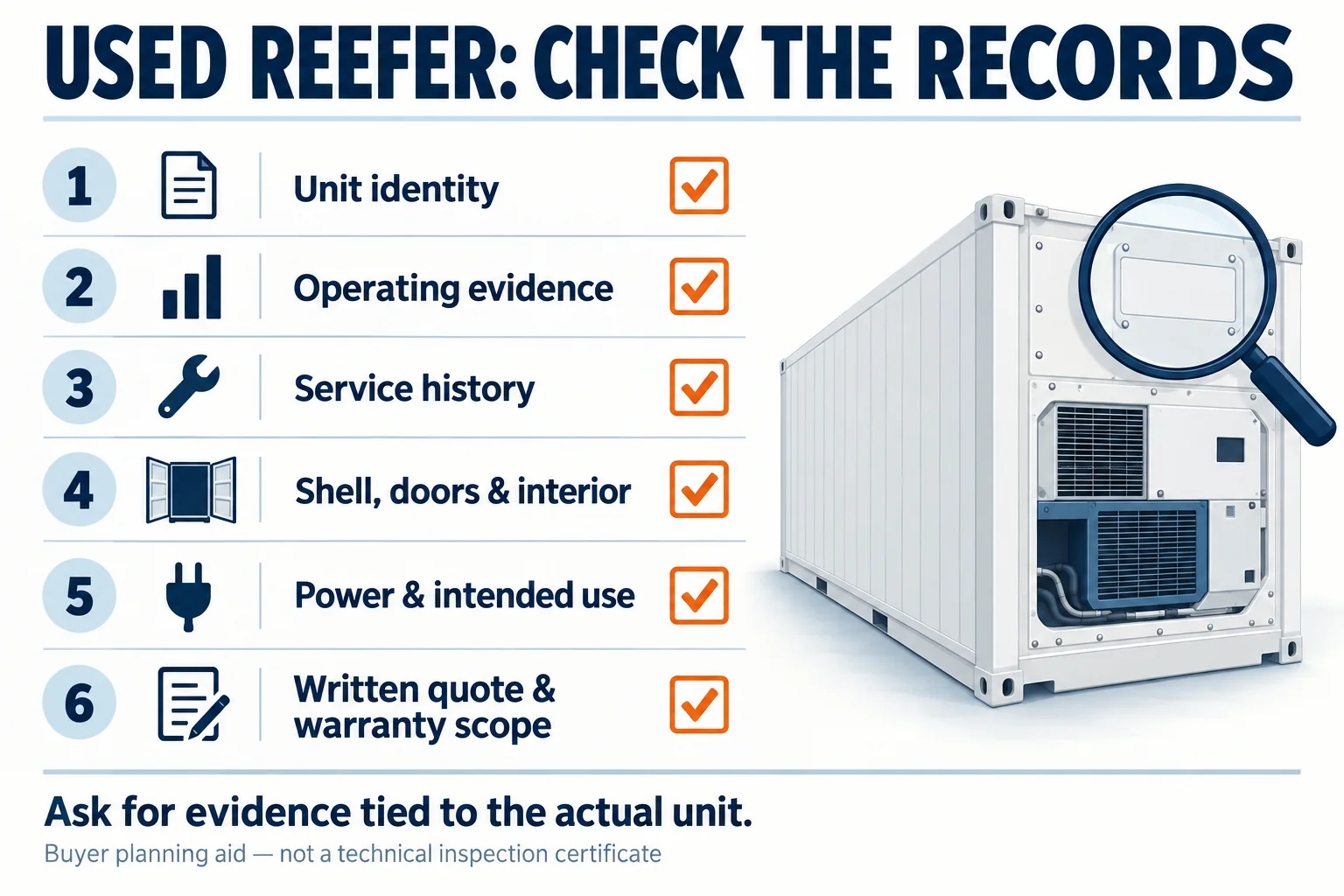
Acquiring a refrigerated box involves specialized cooling machinery, not merely a steel shell. Before committing funds, use this used refrigerated container checklist to request six tangible records from your seller, verify operational documentation, and ensure quote terms are fully documented in writing.
Imagine finding an appealing online listing for a cold storage unit, admiring the fresh external paint, and then opening an empty file when you request historical service and testing logs. Without written paperwork, you cannot confirm whether the machinery ran properly during its last operational cycle. Working through a systematic used refrigerated container checklist bridges the gap between cosmetic appearance and verifiable mechanical history.
Every equipment assessment starts with confirming exact identity. Ask the supplier for clear photographs of both the container CSC data plate and the cooling machinery stamping. Do not assume the machinery serial number matches the container-shell serial, as reefer boxes and cooling units carry distinct identification numbers and can be replaced over their service lives. Identifying the specific manufacturer and model number allows you to look up relevant technical information; for example, Carrier model-specific manuals establish baseline manufacturer specifications rather than guesswork. Unlike selecting dry storage outlined in our overview of new vs used shipping containers, cold storage requires confirming that quote paperwork, photographs, and records all correspond to the same physical unit. Published equipment options like our 10 foot reefer container serve as a practical starting point to request and verify exact unit dimensions, operating capability, and available inventory.
Never rely on informal assurances that a cooling unit is functional. Physical exterior evaluation aligns with standard container grades, but the refrigeration system demands documented evidence of active operation. As part of a thorough used refrigerated container inspection checklist, request a signed test record or recorded operational log for the specific machine. Ask a qualified technician what the test covers, what ambient temperatures were present during testing, and whether that evidence is relevant to your intended use; a test record alone is not universal proof of future performance under field conditions.
Prospective buyers frequently ask: Where can I find a container inspection checklist? Practical purchasers assemble a dedicated dossier by requesting the unit’s documented service history. It is critical to recognize that a functional versus physical inspection addresses two separate technical questions: physical inspections evaluate structural integrity and weatherproofing, whereas functional evaluations review electrical, control, and cooling components. Inquire specifically about past pre-trip inspections (PTI), routine component servicing, and recent maintenance logs tied to the unit’s serial number. While gathering these records, reviewing our published shipping policy will help you align delivery schedules and site preparation with equipment documentation review.
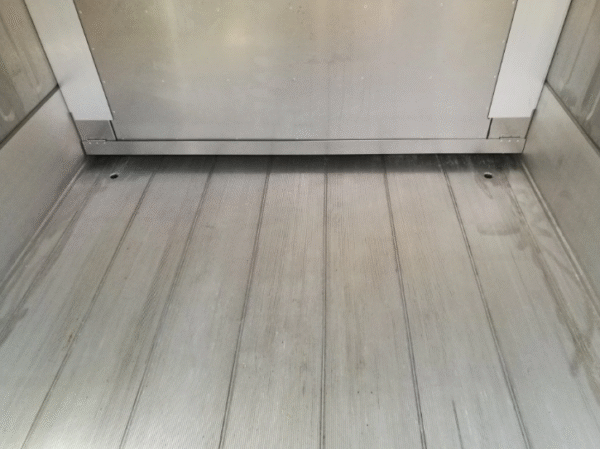
The physical condition of the insulated envelope warrants careful review alongside the machinery. When working through your used reefer checklist, request clear photographs and written inspection notes covering the interior floor, ceiling, wall linings, and cargo doors. Rather than assuming photographs confirm sanitary conditions or sound insulation, use photos to flag potential concerns such as floor gouging, panel separation, or corrosion. Ask about the physical condition of the door seals and operating hardware to ensure the doors close squarely. Detailed visual records help your inspector determine whether an on-site physical evaluation is necessary before delivery.
Refrigerated containers require specific commercial electrical configurations to run safely. Request a clear photograph of the unit’s electrical data nameplate and consult the manufacturer manual for published electrical requirements, including voltage and phase. Provide these exact nameplate figures to a licensed electrician to evaluate your site service and disconnect requirements; never attempt DIY wiring or assume residential supply is adequate. Additionally, document your operational intentions with the supplier: state planned contents, loading conditions, and required holding temperatures so the supplier can evaluate suitability, keeping in mind that holding cold goods and pulling down warm products create distinct cooling demands.
Buyers often ask: How much does a 20ft refrigerated container cost? Final equipment pricing cannot be reduced to a generic baseline because costs reflect unit age, machinery condition, freight logistics, and current market availability. Insist on a formal itemized quotation that binds the specific container and machinery serial numbers to agreed pricing. Clarify whether any warranty coverage is provided, and ensure all warranty scope, functional limitations, exclusions, and return terms are explicitly stated in writing before payment is finalized.
| Check | Record Requested | What Remains to Verify |
|---|---|---|
| 1. Identity | Photographs of container plate and machinery nameplate | Model and serial match between quote, invoice, and physical unit |
| 2. Operation | Operational test run sheet with recorded temperatures | Qualified technician review of recorded results and remaining test needs |
| 3. Service History | Functional and physical inspection logs, PTI history | Scope of past component repairs and maintenance dates |
| 4. Physical Shell | Interior, floor, panel, and door seal inspection photos | Condition of door seals, floor channels, and square door closure |
| 5. Electrical & Use | Electrical nameplate specifications and application notes | Licensed electrician review of site voltage, phase, and intended storage load |
| 6. Commercial Terms | Itemized quotation and written warranty terms | Inclusion of delivery scope, serial assignment, and stated warranty limits |
ContainerSupCon delivers containers across eligible US addresses where access is verified and backed by a written quotation. Published contact information is available at +1 (865) 336-0062 (Monday–Friday 08:00–17:00, Saturday 09:00–15:00 Eastern). When you are ready to evaluate inventory, explore our 10 foot reefer container options or request an exact-unit quote outlining your delivery zip code, electrical service, and storage temperature requirements. Following this used refrigerated container checklist helps you compare the evidence before deciding on your cold storage purchase.