Address
124 Tellico Port Rd, Vonore, TN 37885
Work Hours
- Monday – Friday: 8:00 AM – 5:00 PM
- Saturday: 9:00 AM – 3:00 PM
- (GMT-05:00) Eastern Standard Time
Address
124 Tellico Port Rd, Vonore, TN 37885
Work Hours
Address
124 Tellico Port Rd, Vonore, TN 37885
Work Hours
Address
124 Tellico Port Rd, Vonore, TN 37885
Work Hours
Compare blocks, pads, piers and footings for shipping containers, including support layout, sub-base, anchorage and lifting safety.
Shipping container foundation blocks can form part of a point-support system that raises and levels a container, but “put it on blocks” is not a complete design. The blocks or piers, bearing area, sub-base, support locations and connections must suit the soil, container, contents, intended use and local requirements. Use load-rated materials and qualified help instead of improvised supports.
| Term | What it usually describes | What must be verified |
|---|---|---|
| Foundation block or pad | A manufactured or site-selected support placed between the container and prepared base | Rated capacity, bearing area, material, stability and compatibility |
| Precast pier | A manufactured concrete support assembly | Product documentation, footing or sub-base, height, connection and load |
| Poured concrete footing or pier | A site-built support designed for point loads | Soil, depth, reinforcement, dimensions, frost and inspection requirements |
| Helical pile or steel pier | An engineered deep or adjustable support system | Design capacity, installation records, corrosion exposure and connection details |
A solid-looking masonry unit is not automatically a safe container support. Do not substitute hollow landscaping or general-purpose blocks for an engineered, load-rated solution. Product labels and a site-specific design matter more than a generic material name.
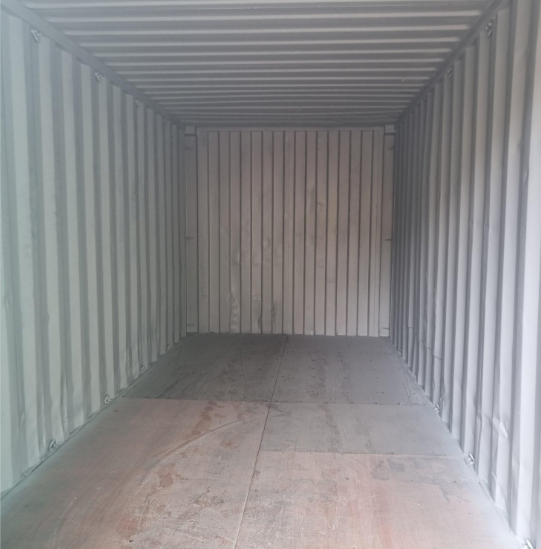
Intermodal container frames transfer loads through structural members that include corner castings, corner posts and rails. Corner support is central to many layouts, but the number and position of supports cannot be set safely from nominal length alone. A 40ft unit, modified unit, heavy contents or weak soil may call for a different design.
Misaligned or uneven supports can twist the frame and change door operation. Too little bearing area can allow settlement. Excessive support height can add stability and connection concerns. Have the support pattern and elevations specified for the project instead of copying a diagram from another site.
Foundation blocks are only as stable as the material beneath them. Remove vegetation, organic material and loose debris from the planned bearing area. Evaluate fill, soft soil, slope, frost and drainage. Where an aggregate sub-base is used, its material, depth and compaction should be chosen for the soil and load.
The USDA NRCS Web Soil Survey can help screen soil conditions, while an on-site professional should resolve actual bearing and settlement questions. Keep runoff from washing out or softening individual supports.
Point supports can reduce the amount of concrete or excavation and can help raise a container above surrounding grade. A full compacted pad can provide a broad working surface and drainage layer. A slab can serve a more permanent or modified project. The broad shipping container foundation guide compares these systems.
Do not select blocks only because the site looks flat. A visually level surface can still contain weak fill or hold water. Likewise, a slab is not automatically correct unless its soil preparation, reinforcement, drainage and loads are designed.
A shipping container is heavy, and stored contents add weight. Do not crawl beneath an unsupported unit or rely on an improvised jack-and-block arrangement. Use a qualified operator, lifting plan, equipment rated for the load and stable cribbing or supports appropriate to the work. Keep people outside the drop zone.
If doors begin to bind, stop and inspect the site rather than forcing them. Settlement may be one cause, but door hardware or frame damage can also affect operation. The shipping container leveling guide explains the safe decision sequence.
Foundation supports and anchorage solve related but different problems. Bearing supports vertical loads; anchorage and connections may be needed for wind, flood or other forces and for a continuous load path. Requirements depend on the adopted code and project. Ask the local authority and a qualified designer before selecting anchors or modifying corner castings.
Coordinate foundation work with the Delivery Guide. Plan the footprint with the 20ft dimensions guide or 40ft dimensions guide.
The correct support is a load-rated product or engineered footing selected for the container, soil, loads, height and local requirements. There is no universal block.
Do not assume a general-purpose hollow block is suitable. Use documented, load-rated supports and a design appropriate to the site.
The number and spacing depend on container length, condition, contents, modifications, soil and support capacity. Have the layout specified for the project.
The bearing surface must be evaluated and prepared for the load. Loose, soft or organic material can settle; the correct sub-base is site-specific.
Moving or lifting a loaded container can be hazardous. Use a qualified operator and equipment rated for the work.
Browse current inventory, including 20 foot and 40 foot containers. Confirm the exact unit before the foundation design is finalized.